This content has been archived. It may no longer be relevant
Forty-Two Years of Showing Up: The 42nd Chicago Latino Film Festival Arrives This April
Chicago Latino Film Festival | March 2026
It started in 1985 with 14 films, a concrete wall, and an audience of 500 people who believed that Latin American stories deserved a screen. This April, the Chicago Latino Film Festival — the longest-running Latino film festival in the United States — returns for its 42nd edition, and the numbers tell a story all their own: 51 feature films, 31 short films, 15 premieres, and twelve days of cinema that spans Mexico, Central and South America, the Caribbean, Spain, Portugal, and the United States.
All of it, once again, organized and produced by the International Latino Cultural Center of Chicago.
The 42nd Chicago Latino Film Festival runs April 16 through 27, 2026, with all screenings at the Landmark Century Centre Cinemas, 2828 N. Clark Street, Chicago. It is, as it has been for four decades, one of the most important cultural events of the year for Chicago’s Latino community — and for anyone who believes that cinema is, at its best, an act of radical empathy.
A Different Kind of Opening and Closing Night
This year, the festival’s signature bookend events will look and feel a little different — and for reasons that are worth understanding.
Opening Night (April 16) and Closing Night (April 27) will not feature the traditional Gala format. In its place, the ILCC has made a considered choice: a celebration built not around spectacle, but around the reason we all come together in the first place — the films, and the people who made them.
Both evenings will begin with a pre-screening reception featuring hors d’oeuvres and a cash bar. Filmmakers will be in attendance and available to speak with guests before the screening. A Q&A with the directors follows the film. It is an intimate format, and an intentional one. The most powerful thing the festival can offer right now is exactly what it has always offered: the experience of gathering, together, to witness stories that would otherwise go unseen.
Tickets for Opening and Closing Night events are $35 general admission / $25 for seniors, students, and ILCC members — and include the reception, the screening, and the post-film conversation.
Opening Night: It Would Be Night in Caracas
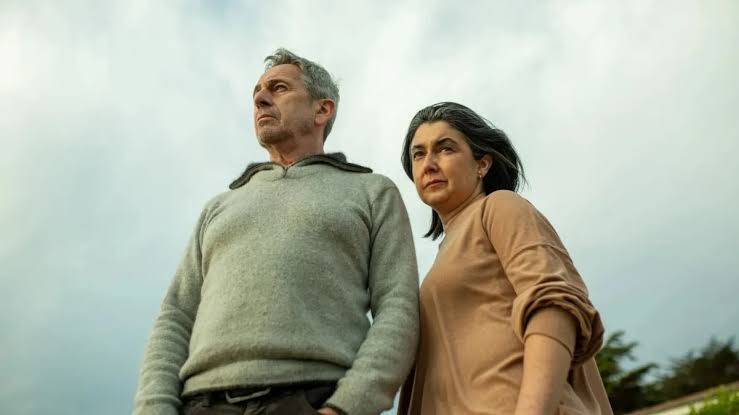
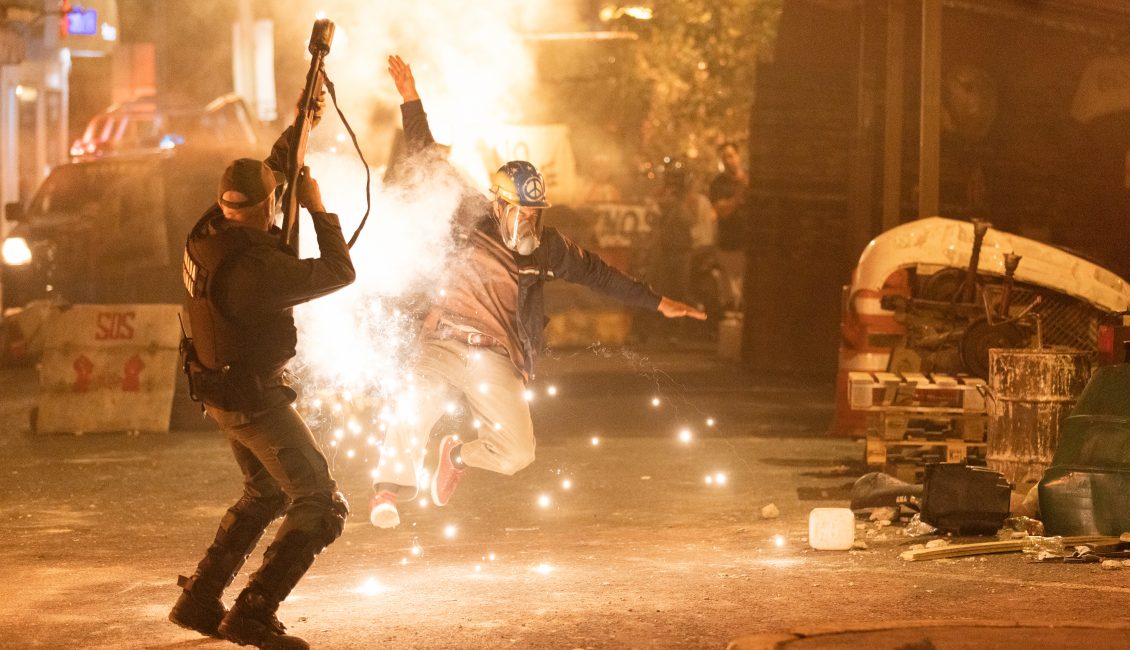
The film chosen to open the 42nd edition speaks directly to the cultural and political moment we inhabit. “Aún Es De Noche en Caracas” / It Would Be Night in Caracas is a dystopian vision of contemporary Venezuela, co-directed by Mariana Rondón and Marité Ugás — two of Latin America’s most significant filmmakers, both veterans of festival circuits worldwide. Both directors will be in attendance on Opening Night for the post-screening Q&A.

The choice to open with a Venezuelan story, told by Venezuelan women directors, in a moment when hundreds of thousands of Venezuelans have scattered across Latin America and the United States in search of safety, is not a coincidence. It is a statement.
Closing Night: The Dog, My Father, and Us
The festival closes on April 27 with a film that offers something rare and necessary at the end of an intense twelve days: laughter rooted in love. “The Dog, My Father, and Us”, directed by Ecuador’s Pablo Arturo Suárez, is this year’s Closing Night selection — a comedy that, in the best Latin American tradition, uses humor to crack open something much deeper. Filmmakers will be in attendance for the Closing Night reception and post-screening conversation as well.

Fireflies at El Mozote: A World Premiere That Became Something Else
One of the most discussed films of this year’s lineup was destined to be a world premiere at the 42nd CLFF. “Fireflies at El Mozote”, written and directed by the late Salvadoran filmmaker Ernesto Melara, is one of the most anticipated Latin American films of 2026 — a harrowing, humane reconstruction of the December 1981 massacre at El Mozote, El Salvador, where Salvadoran government troops annihilated an entire village. The film follows José, a ten-year-old survivor found hiding in the rainforest, and centers on Paz Vega as Alma, the guerrilla fighter who pulls him back from the edge. The supporting cast includes Juan Pablo Shuk (Narcos), Yancey Arias (Queen of the South), Jeff Fahey, and Mena Suvari.
Produced by Moctesuma Esparza (Selena) and Magenta Light Studios, the film carries the full weight of its director’s legacy: Ernesto Melara passed away at 73 before he could see it reach audiences. Before his death, he dedicated the film to “the victims of war violence in El Salvador, and elsewhere throughout Latin America and the rest of the world.”
That world premiere was going to be Chicago’s.
Then, earlier this month, distributor Magenta Light Studios announced it would release Fireflies at El Mozote theatrically across the United States beginning April 17, 2026 — just one day after the festival opens — with simultaneous openings in Los Angeles, New York, Miami, Chicago, and Houston. The world premiere that was curated for CLFF audiences became a commercial theatrical release instead, launching in the middle of the festival itself.
The film remains an Official Selection of the 42nd Chicago Latino Film Festival, and Chicago audiences will still be among the first in the world to see it on the big screen.
Films Worth Your Attention
The full lineup spans more than a dozen countries and runs the full range of genre and form. A few selections that are generating significant attention:
Cordillera de Fuego (Guatemala) — Jayro Bustamante, the director behind Ixcanul and the internationally acclaimed La Llorona, returns with an urgent story of indigenous volcanologists fighting government corruption to protect their communities from an active volcano that Guatemala City’s power structure sees as a commercial opportunity. This is one of the most anticipated films from Central America in years.
Noviembre (Colombia) — First-time director Tomás Corredor confines the audience to a single bathroom inside the Palace of Justice during the M-19 guerrilla takeover of November 6, 1985. Seventy hostages. Tanks in the courtyard. A country fracturing. The claustrophobia is the point.
De Tal Palo (Puerto Rico) — A grandfather with early-onset Alzheimer’s takes custody of his granddaughter and discovers in art and photography a language that memory loss cannot erase. Directed by Iván Dariel Ortiz, it is one of the most tenderly human films in this year’s program.
Borealis (Puerto Rico) — Cinematographer-turned-director Heixán Robles goes full speculative: a solar flare erases all human memory, and a woman with no past except a C-section scar searches a restructured world for her child. Puerto Rican science fiction at the edge of its imagination.
Writer (Argentina) — Paula de Luque dramatizes the true story of Rodolfo Walsh, the young translator who, following a 1956 massacre by Argentina’s military, tracked down a survivor and wrote Operation Massacre — one of the first works of non-fiction narrative journalism in history, years before Truman Capote would publish In Cold Blood.
Death of a Comedian (Argentina) — The directorial debut of acclaimed actor Diego Peretti, financed through a crowdfunding campaign of more than 10,000 micro-investors, follows a dying man who abandons everything to find his favorite comic book artist in Brussels — a film where fiction and graphic novel reality blur into each other.
1938: When Mexico Recovered Its Oil (Mexico) — After a twenty-year production journey, director Sergio Olhovich dramatizes the moment President Lázaro Cárdenas nationalized Mexico’s petroleum reserves against the opposition of British and American oil companies. Given the current global energy climate, the timing could not be more resonant.
Eva (Honduras) — A quietly radical debut about a trans grandmother who takes custody of her grandchild. Understated, necessary, and deeply felt.
Isla Negra (Chile) — A power struggle set along the Pacific coast where Pablo Neruda spent his final days.
Tickets, Passes, and Practical Information
All 42nd CLFF screenings take place at Landmark Century Centre Cinemas, 2828 N. Clark Street, Chicago, IL 60657. Parking is available in the Century Shopping Centre lot via Clark Street at $6 validated for four hours. All cinemas are ADA compliant.
Festival Passport (10 admissions): $110 — currently on sale at early-bird pricing through late March. A passport is the single best value at this festival and the way most serious attendees experience it. Get it here.
Individual tickets: $17 per screening.
Opening and Closing Night events: $35 general / $25 seniors, students, and ILCC members — includes pre-screening reception, film, and Q&A with filmmakers.
Tickets and passes are available at chicagolatinofilmfestival.org.
Forty-Two Years of Something That Matters
The ILCC has spent four decades building something the film industry has only recently started to notice: a Latino audience that is hungry, sophisticated, and deeply loyal to the stories that speak to its experience. The Chicago Latino Film Festival didn’t discover that audience. It grew alongside it, year after year, April after April, in a Midwestern city that has always known that the world’s most important stories are told in more languages than one.
This April, we do it again.
The 42nd Chicago Latino Film Festival | April 16–27, 2026 | Landmark Century Centre Cinemas, 2828 N. Clark Street, Chicago
For tickets, the full schedule, and more information: chicagolatinofilmfestival.org
The Chicago Latino Film Festival is produced by the International Latino Cultural Center of Chicago. For more about the ILCC’s year-round programming in music, film, dance, comedy, visual arts, and theater, visit latinoculturalcenter.org.