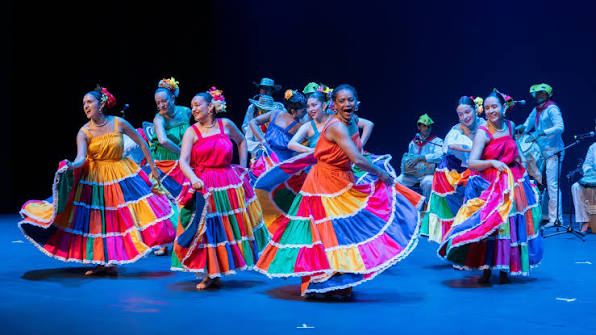
The Chicago Latino Dance Festival returns this year with its biggest lineup yet: fourteen dance companies performing across two free, public events — although suggested donations are available if you would want to support programming such as this throughout Chicago. The Festival will be held on Tuesday, September 29 and Sunday, October 11, produced by the International Latino Cultural Center of Chicago (ILCC).
The festival opens September 29 at the Reva and David Logan Center for the Arts, 915 E. 60th St., from 7 to 9 p.m., and concludes October 11 at the Humboldt Park Fieldhouse, 1440 N. Humboldt Blvd., from 3 to 5 p.m., presented in partnership with the Chicago Park District’s Night Out in the Parks program. Both events are completely free and open to the public.
Opening Night, September 29 — Logan Center for the Arts
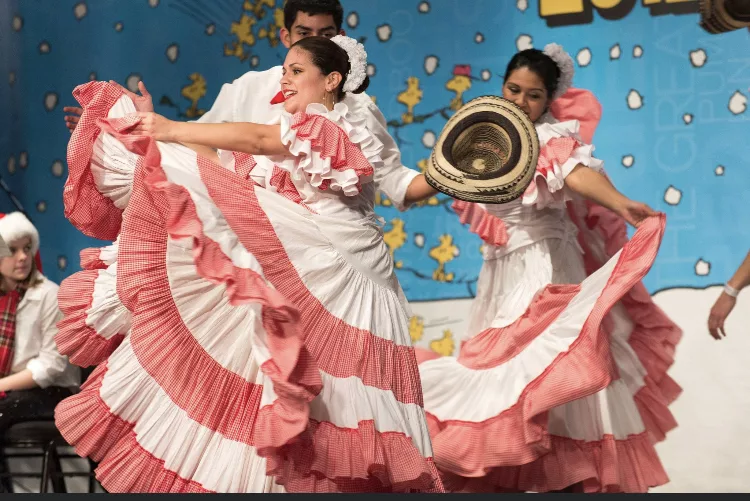
Founded in February 1992 by Guilibaldo “Gil” Criollo, Martha Jiménez, and Gabriel Rodriguez, Tierra Colombiana, Inc. — also known as Tierra Colombiana Dance Ensemble — is the oldest Colombian folkloric dance company in Chicago and throughout the Midwest. Under the artistic direction of Edgar Serna, the company stands today as the only Colombian dance company in Chicago and the Midwest.
Chicago-based Mexican dancer Anniela Huidobro presents CHINELA, la que brinca y brama, a solo work that gives voice to the lives and courage of migrant women — using the symbol of the chinelo, a traditional jumping dance, to move between joy and celebration and the anger born of systemic violence. Huidobro is an artist-in-residence at the Chicago Cultural Center and a 2026 Chicago Dancemakers Forum Dance Project Grant recipient.
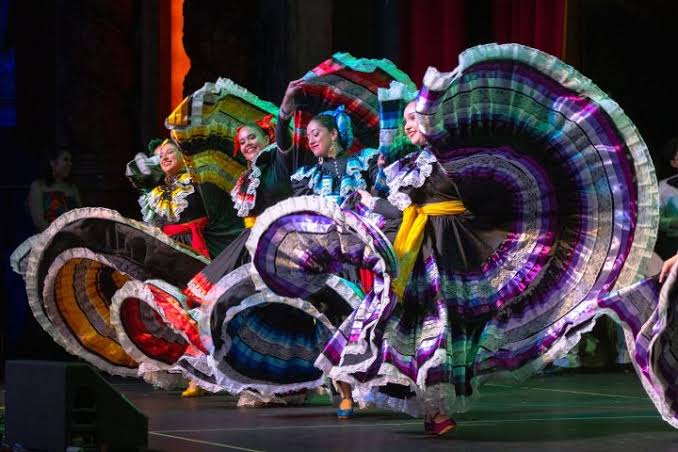
Ballet Folklórico de Chicago presents a sampling of its vast repertory of traditional Mexican dance.
Second City Samba, joined by the Dill Costa Dance Group, brings the sound of Brazilian batucada — from the Pelourinho to the Sambódromo.
And in a festival first, five sets of dancers from the Chicago International Salsa Congress make their Chicago Latino Dance Festival encore presentation — accounting on their own for half of this year’s presenting groups, and for a good chunk of the ten total companies performing across both nights.
“With this fourth edition we have presented over sixty five local Latino groups in total, including nine who are making their debut this year — five from the Chicago Salsa Congress alone — with many more waiting in the wings for future editions. That gives you an idea of the enormity of our city’s Latino dance community. We are so proud to be filling this cultural gap through our Festival,” Mulcahy continued.
Second Night, October 11 — Humboldt Park Fieldhouse
The festival’s closing night, presented as part of Night Out in the Parks, features five local groups representing Venezuela, Honduras, Puerto Rico, Chile, and Spain:
Tamanaco Tambor, an ensemble dedicated to preserving and sharing Afro-Venezuelan heritage through traditional rhythms, music, dance, and tradition.
AfriCaribe, performing traditional bomba dance from Puerto Rico accompanied by live percussion and vocals.
Casa Triana Flamenco, bringing the fire and soul of Andalusian flamenco — music and dance both.
Patiperros Dance Group, a staple of Chilean folklore in Chicago, showcasing the rich and unique dances of their homeland.
And, in a first for the festival, Cultura Viva presents a program dedicated to Honduran traditional dance.
A Platform for Every Generation
From youth companies building cultural pride in young dancers to professional ensembles preserving centuries-old traditions, the Chicago Latino Dance Festival is built to serve every generation of Chicago’s Latino community. It creates a platform for cultural exchange, education, and celebration — while reinforcing Chicago’s standing as a major hub of Latino culture.
About Us
The International Latino Cultural Center of Chicago (ILCC) is a pan-Latino, nonprofit, multidisciplinary arts organization dedicated to developing, promoting, and increasing awareness of Latino cultures among Latinos and other communities, presenting film, music, dance, visual arts, comedy, theater, and culinary arts.
Originally founded as Chicago Latino Cinema, the organization attained not-for-profit status in 1987, centered on its flagship event, the Chicago Latino Film Festival (CLFF) — now in its 42nd year and the longest continuously-running Latino film festival in the United States, having screened more than 4,500 films from across Latin America, Spain, Portugal, and the U.S.
In July 1999, the organization changed its name to the International Latino Cultural Center of Chicago and expanded its programming to include music, theater, dance, comedy, and art exhibitions. Today the ILCC presents more than ten major annual events, including the Chicago Latino Music Series (celebrating its 20th edition this year), Films in the Park (also in its 20th season), the monthly Reel Film Club (in its 18th year), and the Chicago Latino Dance Festival, now in its fourth year.
At the heart of the ILCC’s mission is the belief that understanding through the arts is the most powerful path to breaking down stereotypes, building bridges across communities, and affirming that Latino identity is defined by more than 20 different nationalities spanning every social and racial background.
More information is available at LatinoCulturalCenter.org.
CALENDAR OF EVENTS
Tuesday, September 29 Logan Center for the Arts — University of Chicago 915 E. 60th St., Chicago 7–9 p.m.
- Tierra Colombiana (Colombia)
- Anniela Huidobro (Modern)
- Ballet Folklórico de Chicago (Mexican)
- Second City Samba (Brazilian)
- Salsa Congress (Caribbean)
Sunday, October 11 (Night Out in the Parks) Humboldt Park Fieldhouse 1440 N. Humboldt Blvd. 3–5 p.m.
- Tamanaco Tambor (Venezuelan)
- Cultura Viva (Honduran)
- AfriCaribe (Puerto Rican)
- Casa Triana Flamenco (Spanish)
- Patiperros Dance Group (Chilean)