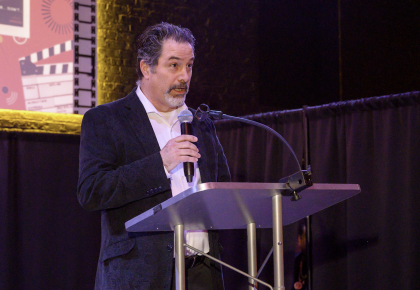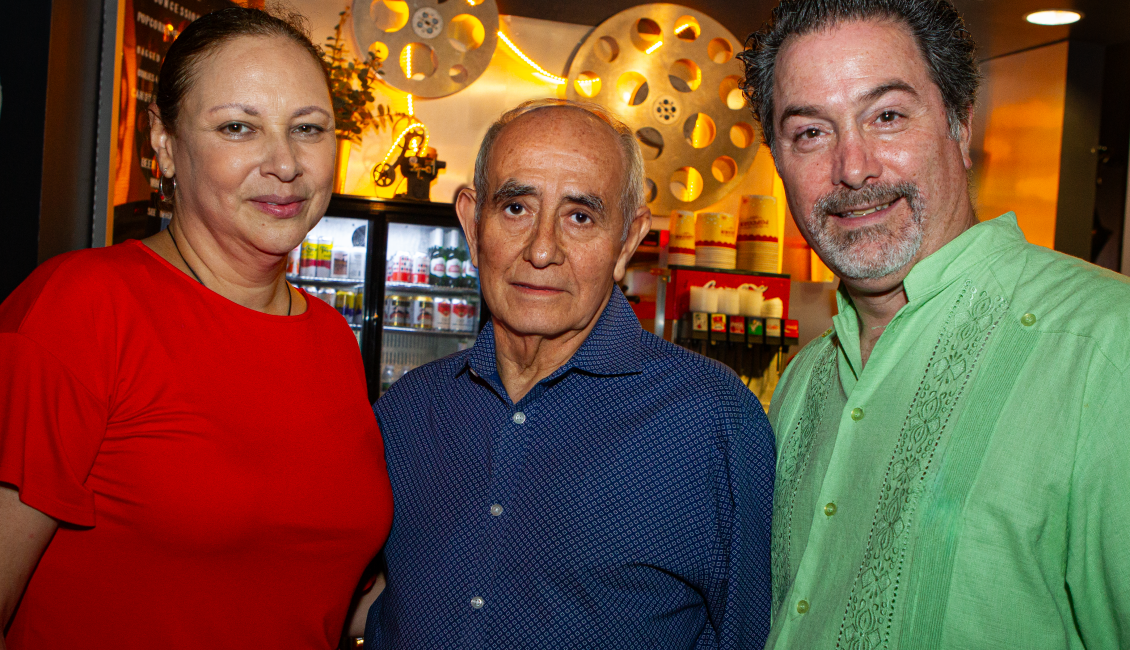
On July 1, Mateo Mulcahy officially took the helm as Executive Director of the International Latino Cultural Center of Chicago (ILCC), stepping into the role after Founder and Executive Director Emeritus Pepe Vargas announced his retirement last month due to health issues. Mulcahy, who spent the past four and a half years as the organization’s Deputy Executive Director, shared a letter to the ILCC’s friends and supporters laying out his vision for where the organization goes from here.
Honoring a Legacy
Before looking forward, the ILCC paused to look back. On June 30, the organization celebrated Vargas’s legacy — and his 78th birthday — with a special tribute event at Facets Film Forum on West Fullerton Avenue. A full recap of that evening is available on the ILCC’s website for anyone who wants to revisit the celebration.
Mulcahy’s Vision: Seven Pillars, One Mission
At the center of Mulcahy’s plan is a restructuring of the ILCC’s programming around seven equal pillars: film, music, dance, theater, visual arts, literary arts, and culinary arts. He’s also focused on building what he describes as more substantive partnerships with government agencies, community organizations, and universities, alongside new strategies for drawing younger and more diverse audiences into the ILCC’s roughly 150 annual events.
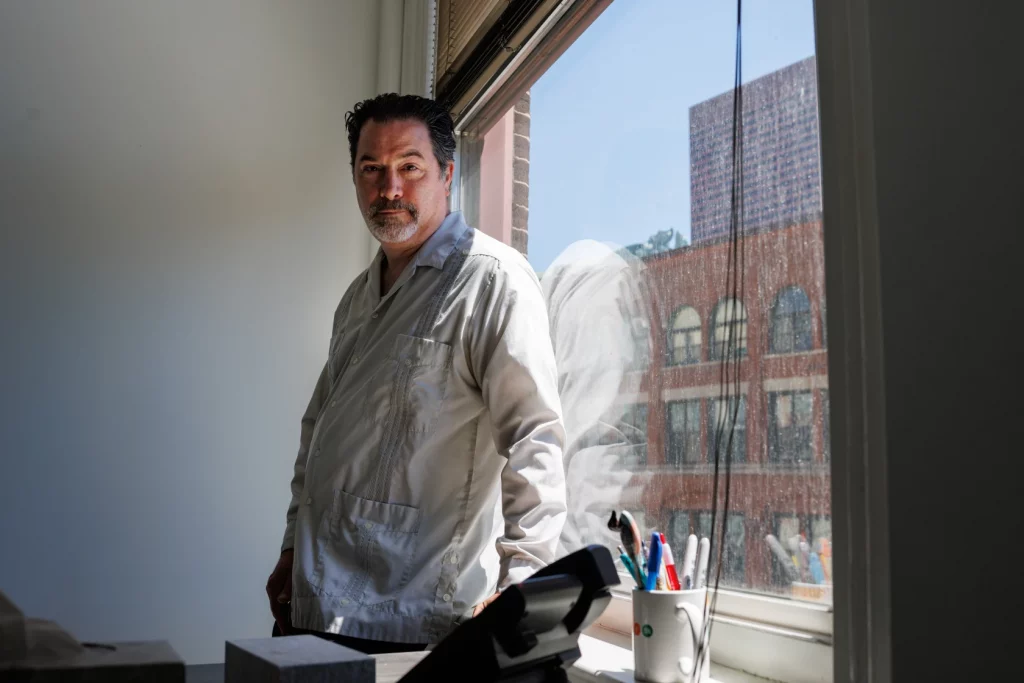
Anthony Vazquez/Sun-Times – Read Article here
A Career Rooted in Latino Arts Advocacy
Mulcahy’s path to this role stretches back more than four decades. A bilingual, bicultural Chicago native of Mexican and Irish descent, he began his advocacy work in St. Louis after earning a B.A. in Spanish and International Development from Washington University. There, he helped build the city’s Latino cultural scene from the ground up — performing as a musician and vocalist with El Caribe Tropical, hosting Spanish-language radio for more than 20 years, and co-founding three Latino and international live music venues (Club Viva!, La Onda, and Candela), two of which are still open today. He also helped launch Radio Cucui, at WEW 770 AM, St. Louis’s first fully professional Spanish-language station at the oldest AM station west of the Mississippi. As a music event producer, Mulcahy is credited with bringing world-renowned artists — including Oscar D’Leon and Los Tigres del Norte — to St. Louis venues, opening a whole new path for artists in the region.
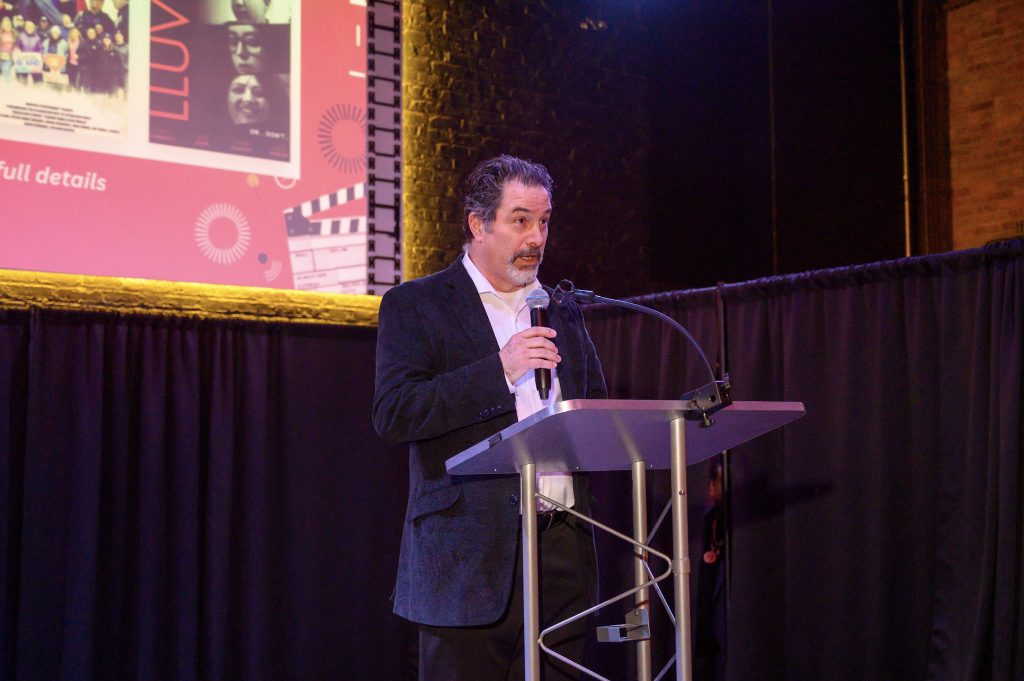
After returning to Chicago in 2006, Mulcahy spent 16 years as Director of Community Projects and Events at the Old Town School of Folk Music. As the only Latino director during his tenure, he helped turn the institution into the Midwest’s leading presenter of international music and dance, leading grant-funded festivals, residencies, and international exchange programs.
Since joining the ILCC in 2022, Mulcahy has already doubled the organization’s programming, with a particular focus on music and dance — launching the Chicago Latino Dance Festival in 2023 and the Levitt VIBE Chicago Music Series in 2024.
About the ILCC
The International Latino Cultural Center of Chicago is a pan-Latino, nonprofit, multidisciplinary arts organization dedicated to promoting Latino cultures through film, music, dance, visual arts, theater, and the literary and culinary arts. Originally founded as Chicago Latino Cinema, the organization earned nonprofit status in 1987, anchored by its flagship event: the Chicago Latino Film Festival, now in its 42nd year and recognized as the longest continuously-running Latino film festival in the United States, having screened more than 4,500 films from across Latin America, Spain, Portugal, and the U.S.
In 1999, the organization was renamed the International Latino Cultural Center of Chicago and expanded into music, theater, dance, comedy, and art exhibitions. Today, its programming includes the Chicago Latino Music Series (20th edition this year), Films in the Parks (also in its 20th season), the monthly Reel Film Club (18th year), and the Chicago Latino Dance Festival (now in its fourth year), among others.
At its core, the ILCC is guided by the belief that the arts are one of the most powerful ways to break down stereotypes and build bridges across communities — and that Latino identity spans more than 20 nationalities and every social and racial background. The organization is committed to reaching all of Chicago, not just one neighborhood or cultural tradition.
Learn more at latinoculturalcenter.org.
Additional Coverage: