By James Klein | International Latino Cultural Center of Chicago
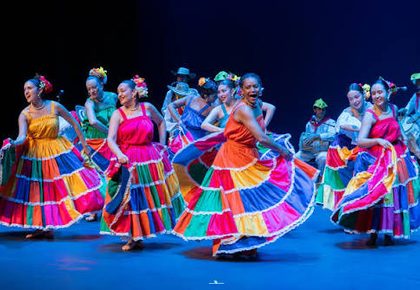
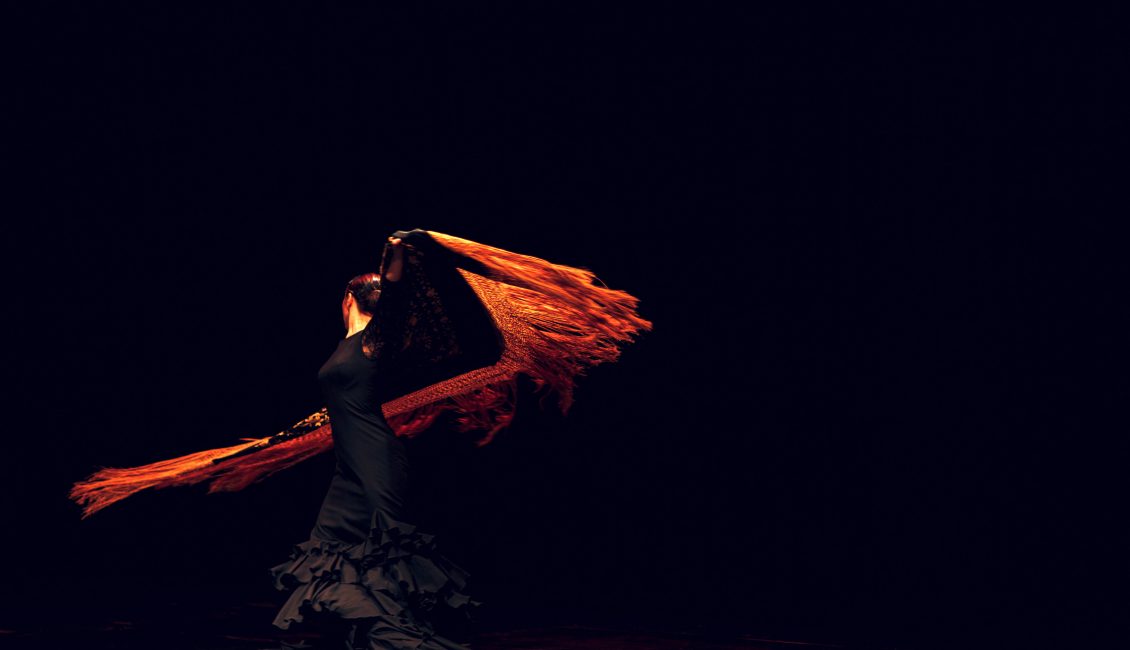
There is an art form that refuses to be tamed. It lives in the stomp of a heel on a wooden stage, in the ache of a voice reaching for something beyond language, in the precise tension of a guitarist’s fingers coaxing fire from six strings. Flamenco is not something you simply watch — it is something that finds you, grabs you, and doesn’t let go. It transmits the anguish, the pain, the joy and the passions of life, all expressed thorough fiber and sinew and an ancient calling from the past.
The 24th Chicago Flamenco Festival, presented by the Instituto Cervantes of Chicago in collaboration with the International Latino Cultural Center of Chicago, brings an extraordinary international lineup to the city from March 1 through March 17, 2026. All performances take place at the Instituto Cervantes of Chicago, 31 West Ohio Street in the River North neighborhood. Tickets range from $20 to $35, and the full schedule with ticketing is available at chicago.cervantes.es.
This year as in years past, the festival in Chicago coincides with the World Flamenco Congress (Congreso Mundial de Flamenco), a global initiative founded in 2021 by the headquarters of the Instituto Cervantes in Spain. Chicago is one of the principal host cities in 2026, placing our city squarely at the center of an international conversation about flamenco’s past, present, and future. That is not a small thing. That is Chicago being recognized as a major North American home for one of humanity’s most profound art forms — one that UNESCO itself declared Intangible Cultural Heritage of Humanity back in 2010.
A Festival Built on Depth
Teresa Hernando, Cultural Programs Curator at the Instituto Cervantes of Chicago and the architect of this festival’s vision, puts it plainly:
“This Festival was born from the conviction that Chicago deserved to experience flamenco at the highest artistic level,” said Teresa Hernando, Cultural Programs Curator and Festival Producer. “For twenty-four years, we have built a platform where master artists and visionary creators meet an informed and passionate audience. It is not a showcase; it is a dialogue
between history and the present. Here, tradition and risk coexist.”
The 2026 program is remarkable in its range. Rather than serving up a single, monolithic vision of flamenco, it places the art form in honest dialogue with its own complexity — its Andalusian roots, its Moorish and Mediterranean inheritance, its contemporary restlessness, and its capacity for genuine cross-cultural encounter.
The Full Performance Schedule
Sunday, March 1 — RAW (Opening Night) Granada-born dancer and choreographer Irene Morales opens the festival alongside cantaor El Calerito and guitarist José Fermín Fernández. RAW strips flamenco to its essential architecture — rhythm, breath, gesture, silence — while weaving in electronic textures that expand the form without losing its pulse. This is flamenco distilled to its bones, and it is the perfect entry point for the festival.
Friday, March 6 — Latente/Malagueña Guitarist Dani de Morón — born in Morón de la Frontera and shaped by the legendary lineage of Diego del Gastor — brings original compositions alongside the deeply traditional Malagueña. A collaborator of José Mercé, Paco de Lucía, and Antonio Canales, Dani de Morón is one of the most technically authoritative guitarists working in flamenco today.
Saturday, March 7 — YARIN One of the most conceptually daring offerings of the festival. Andrés Marín, one of flamenco’s most innovative choreographer-dancers, meets Jon Maya and the acclaimed Kukai Dantza company in an encounter between flamenco and ancestral Basque dance. Kukai Dantza — winners of Spain’s National Dance Award for creation in 2017 — bridges ancient Basque tradition with contemporary movement. Live music by Basque musician Julen Achiary and the haunting rhythms of the txalaparta percussion instrument make this an evening unlike anything Chicago stages regularly. YARIN is a reminder that identity and artistic dialogue are not mutually exclusive — they can be the same conversation.
Saturday, March 14 — José Antonio Rodríguez ⭐ Co-produced by the ILCC Guitarist José Antonio Rodríguez brings an evening dedicated entirely to the flamenco guitar repertoire, bridging classical structure with contemporary harmonic language. This concert is co-produced by the ILCC, making it a particularly meaningful night for our organization and our community. Tickets are $20–$35 at chicago.cervantes.es — don’t miss it.
Tuesday, March 17 — Seffarine: From Fez to Jerez ⭐ Co-produced by the ILCC | Festival Closing Night The festival closes — and what a closing it is. Seffarine, led by Moroccan vocalist Lamiae Naki and multi-instrumentalist Nat Hulskamp, joined by dancer Manuel Gutiérrez and bassist Yosmel Montejo, traces centuries of musical exchange between North Africa and Andalusia. The program illuminates something that often gets overlooked in popular presentations of flamenco: its deep, living roots in the Moorish world of medieval Iberia. From Fez to Jerez is not just a concert title — it is a historical argument made in music and movement. This closing night is also co-produced by the ILCC. Tickets are $20–$35 at chicago.cervantes.es.
The ILCC’s Role: More Than a Partner
The ILCC’s connection to this festival runs deep. Our Deputy Executive Director, Mateo Mulcahy, is co-producing both the March 14 and March 17 concerts, bringing the ILCC’s creative energy and community reach directly into the heart of the programming.
Mateo had this to say about the collaboration and what these two concerts mean:
The International Latino Cultural Center (or the ILCC) values the opportunity to showcase the bonds between Spain and Latin America through collaborations with the Instituto Cervantes and the Chicago Flamenco Festival. The power of flamenco in its many forms and expressions inspires us to seek out and explore the cultural connections between Spain and Latin America.
Having veteran Maestro José Antonio Rodríguez and Seffarine shows the contrast and evolution of an artform that has lived in our midst for centuries and can still demonstrate the capacity for innovation and growth.
This kind of partnership — between the Instituto Cervantes and the ILCC — reflects exactly what both organizations exist to do: build bridges. Between Spain and the Americas. Between the classical and the contemporary. Between an art form with 1,000 years of history and an audience that may be experiencing it for the very first time tonight.
Listen Before You Go: HablArte! Podcast
Want to go deeper before stepping into the theater? We’ve got you covered.
The latest episode of our HablArte! podcast features an unmissable conversation with Mateo Mulcahy, Teresa Hernando, and Nat Hulskamp and Manuel Gutiérrez of Seffarine. Together, they explore the creative vision behind the festival, the story of Seffarine: From Fez to Jerez, and the living connections between North African musical heritage and Andalusian flamenco. It is the kind of conversation that will completely transform how you hear and see these performances live.
[PODCAST LINK/EPISODE COMING SOON.]
An Invitation
I have been immersed in Latino and Spanish culture my entire life. I grew up in Spain. I attended Spanish schools. I know what it means to feel flamenco not as a spectacle but as a living, breathing thing — something inherited, argued over, reinvented, and fiercely protected by the communities that carry it.
What this festival offers Chicago is rare. It is not a greatest-hits tour. It is not a postcard version of Spain for tourists. It is the real conversation that flamenco artists, scholars, and cultural leaders are having right now, in 2026, about where this art form comes from, where it is going, and what it means for all of us — regardless of whether our family comes from Andalusia, Morocco, the Basque Country, Mexico, Puerto Rico, or Illinois.
Come on March 1. Come on March 6 or 7. Come on March 14 for a masterclass in guitar, or March 17 to hear the musical dialogue between Fez and Jerez close out the festival on a note that will stay with you for weeks.
You don’t need to know anything about flamenco to walk through that door. You just need to be willing to feel something. Willing to open your mind to new things and broaden horizons beyond where the sun rises.
Tickets: $20–$35 | All performances at Instituto Cervantes of Chicago, 31 West Ohio Street Full schedule and tickets: chicago.cervantes.es
The 24th Chicago Flamenco Festival is presented by the Instituto Cervantes of Chicago in collaboration with the International Latino Cultural Center of Chicago, and supported by the Illinois Arts Council Agency, the Tourist Office of Spain in Chicago, and Best Western River North Hotel.